Home / Technology & Methodology
Technology & Methodology
Advanced AI Technology, Grounded in Proven Marketing Methodologies
Our platform uses specialized AI models and established advertising, UX, accessibility, and brand-safety frameworks to analyze, score, improve, and generate high-performing marketing campaigns.
Grounded in AIDA·WCAG 2.2·Google ABCD·Meta Ads·GARM·NN/g·Baymard
Section 01
AI Models & Technology Stack
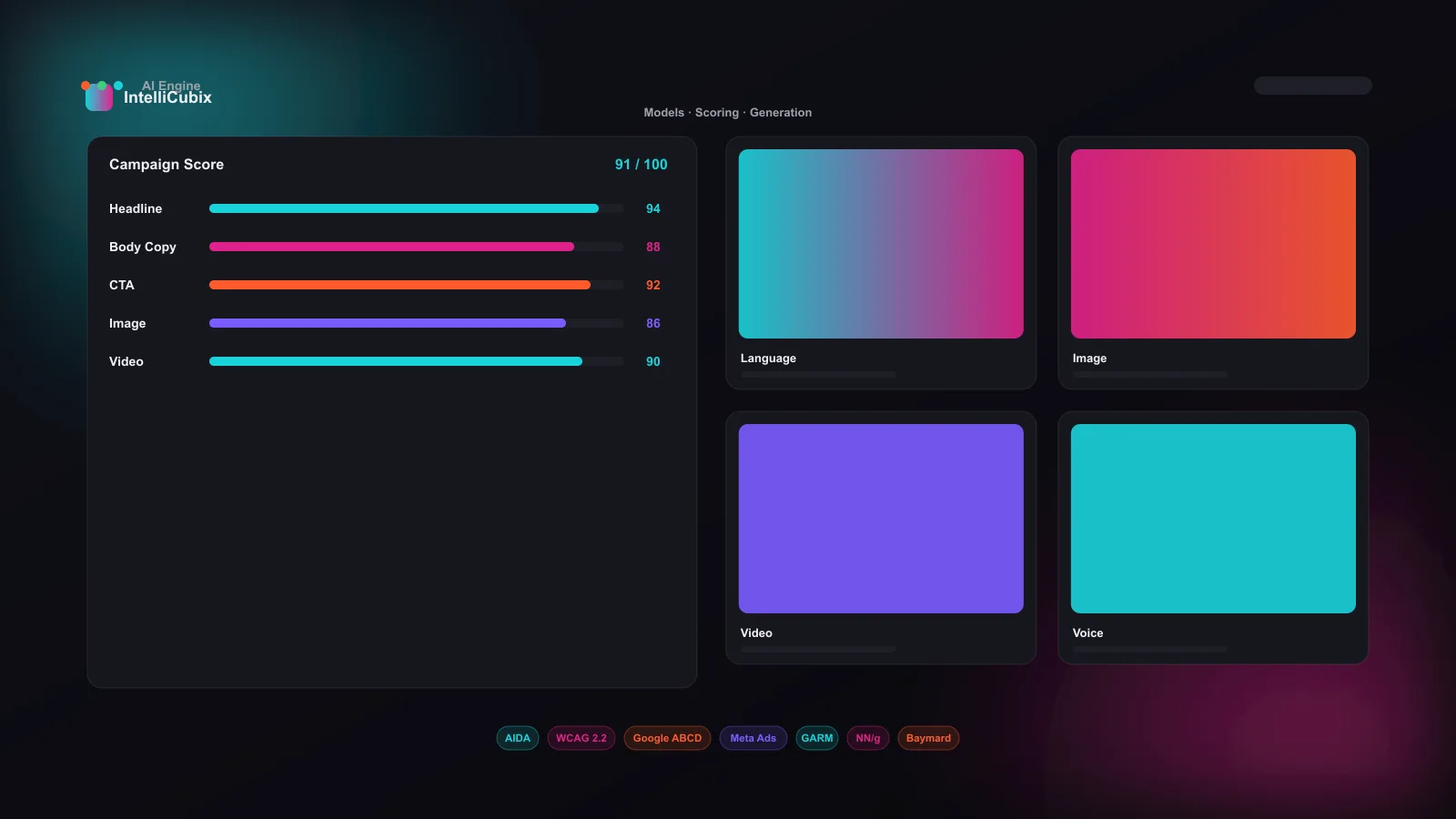
Our platform uses multiple advanced AI models for different creative and marketing tasks. For long-form content, campaign analysis, copywriting, and strategic reasoning, we use high-quality language models such as Claude Opus and GPT models. For image generation, we use GPT Image and other image generation models. For video generation, we use a set of specialized AI video models depending on the campaign type, format, and output quality required. For voice, sound, and music generation, the platform can use ElevenLabs models to create realistic voiceovers, audio, and music assets, so every campaign includes not only text and visuals, but complete multimedia assets.
Language Models
Copywriting, campaign analysis, and strategic reasoning with high-quality models such as Claude Opus and GPT.
Image Models
Ad-ready visuals generated with GPT Image and other image models, with or without embedded text.
Video Models
A set of specialized AI video models chosen by campaign type, format, and required output quality.
Voice & Audio Models
Realistic voiceovers, audio, and music for marketing content using ElevenLabs models.
Section 03
Auto-Fix Campaign Optimization
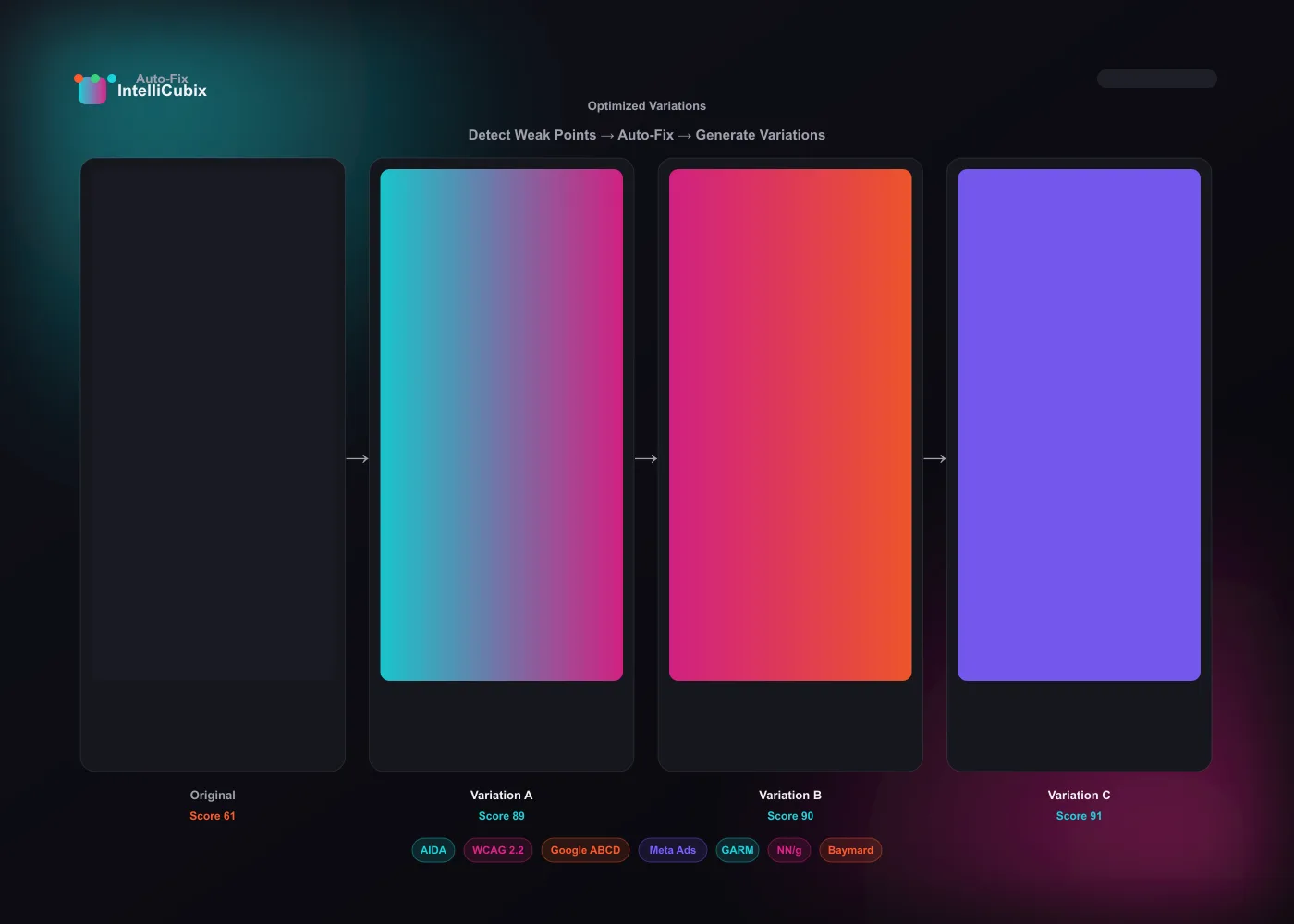
After the analysis is complete, the user can run Auto-Fix. It takes the exact problems detected during the analysis and automatically improves the campaign. The system generates new versions based on the active AI models available, for example, if eight models are active, it can generate eight optimized variations. Each variation keeps the original goal but improves the headline, body copy, CTA, image direction, video direction, and overall messaging.
Each fixed campaign is generated as a new campaign card with a thumbnail, headline, text, image, video, and full details. Clicking a card opens it in a lightbox where all assets can be reviewed.
1
Analyze CampaignFull review of every section→
2
Detect Weak PointsScores & missing elements→
3
Auto-FixApply detected fixes→
4
Generate VariationsOne per active model→
5
Review in LightboxAll assets in one view
Section 05
AI Content Studio
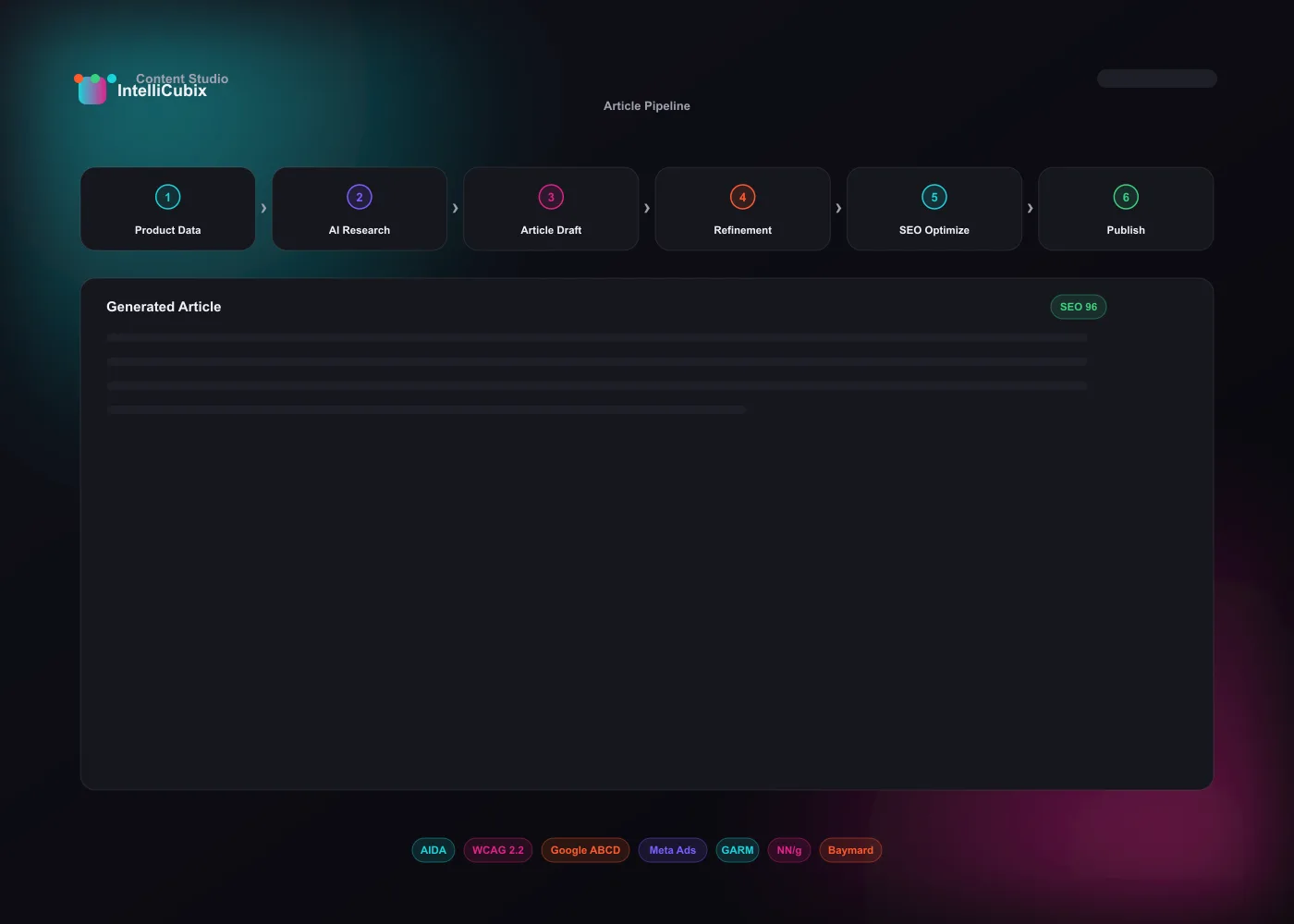
The platform also includes an AI Content Studio for article and blog generation. For every product, the system can collect and process all available information, website content, brochures, images, videos, product advantages, key features, keywords, SEO data, and other brand materials. Based on this, the platform generates a large number of professional articles. The text is generated with advanced language models, while images are generated with AI image models.
The article generation process is not a simple one-step output. The system improves the article through multiple refinement rounds, with each round it becomes more complete, more optimized, and more professional, until it is ready for publishing and strong enough for SEO performance.